The Retail Crisis - Could Collaboration Help?
Hospice shops are closing and margins are reducing. Is more collaboration part of the answer?

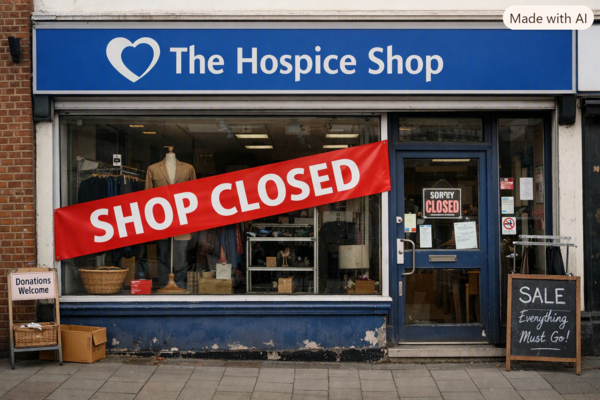
We all know these are hard times for hospices. And they are also hard times for charity retail. Rising employment costs, falling rag prices, increased competition from on-line ‘DIY options’ are all r margins. British Heart Foundation recently announced plans for a major closure programme, whilst Oxfam is reviewing its retail estate, but denied it has similar intentions. Meanwhile, a vindictive article in the Spectator shows that some in the media are gunning for charity retail.
So, it’s not surprising that hospices too are finding retail increasingly challenging. Garden House Hospice recently closed two of its shops having made a loss on retail in 2024/25. Rotherham Hospice has also closed two outlets due to financial pressures.
The average retail ROI for hospices in db associates Virtual Hospice FD Group for the first quarter of 26/27 was 1.26:1, down 15% year on year. And this figure only includes direct costs. Add in wider organisational overheads and I suspect a number of hospices are losing money on their retail operations. Back in March 2024, I wrote about the 'rise and rise of retail.' That article has not aged well.
The challenges seem structural not temporary, so this is a long term challenge. Tax cuts are unlikely and the likes of Vinted aren’t going to disappear. So how can hospices respond?
Surely one answer is more collaboration between hospices? Look at lotteries. UK wide models such as Local Hospice Lottery and Your Hospice Lottery or regional ones like the Hospice Lottery Partnership bring economies of scale, but still allow for strong local branding. I suspect only the very largest hospice lotteries generate more profit by going it alone than they would as part of a consortium.
The nature of retail makes collaboration harder. But not impossible. One hospice I recently worked with – who have a relatively modest number of shops themselves – has been approached by a smaller one to see if they could work together. Why couldn’t one senior retail team oversee more than one chain of hospice shops? Where hospices have merged, this has effectively already happened. In cases, such as at Southern Hospice Group, local names have been kept despite the change in legal structure.
Collaboration could happen in more straight forward ways. Joint superstores could be opened, cost-heavy distribution centres shared, or virtual operations for several hospices set up. Again, local branding can be kept, even if behind the scenes operations are shared. It won’t be easy; collaboration isn't. But it might make some hospices retail operations viable.
One of my favourite quotes about hospices working together came from a now ex-CEO. ‘It used to be a risk to collaborate; now it’s a risk not to collaborate.’
This may be truer in retail than in any other area. If you have any examples, I'd love to hear about them.
