Virtual Hospice Chairs Group
The group brings together hospice Chairs to consider issues of mutual interest in their vital, voluntary roles.


Hospice Chairs and trustees navigate governance, oversight, and strategy with limited peer dialogue — but their roles are critical and complex.
The Virtual Hospice Chairs Group is a quarterly, facilitated forum designed to help Chairs share experiences, test dilemmas, and deepen their leadership in a small, confidential environment.
‘As a relatively new Chair, attending these sessions has been invaluable. The chance to discuss aspects of the role with peers has been of immense help. We also share ideas and initiatives that our hospices have been developing to tackle the challenges facing the hospice sector. I really look forward to each session and always get a lot from them.’ Sarah Higgins, Chair, Community Hospice Greenwich & Bexley
The group lets you explore questions such as Board–Executive relationships, assurance vs interference, succession, collaboration, culture, and oversight. Join if you want:
• Greater confidence in your governance role
• Peer coaching and insight on real-life challenges
• A forum to share ideas and innovations across hospices
• Tools and perspectives for more effective stewardship
Membership of the group is £150 plus VAT per session. Below are details about some of our recent sessions. To learn more about the group, please complete the form below.
At our next session, we will be discussing the challenges in finding the right kind of people to join your Board. And then in keeping them once they have become a Trustee.
Increased responsibility and scrutiny is making governance more demanding - but also means it is all the more important that you have Trustees who have the time, interest and approach to serve in the role.
Please use the form above to contact me if you are interested in this joining this session
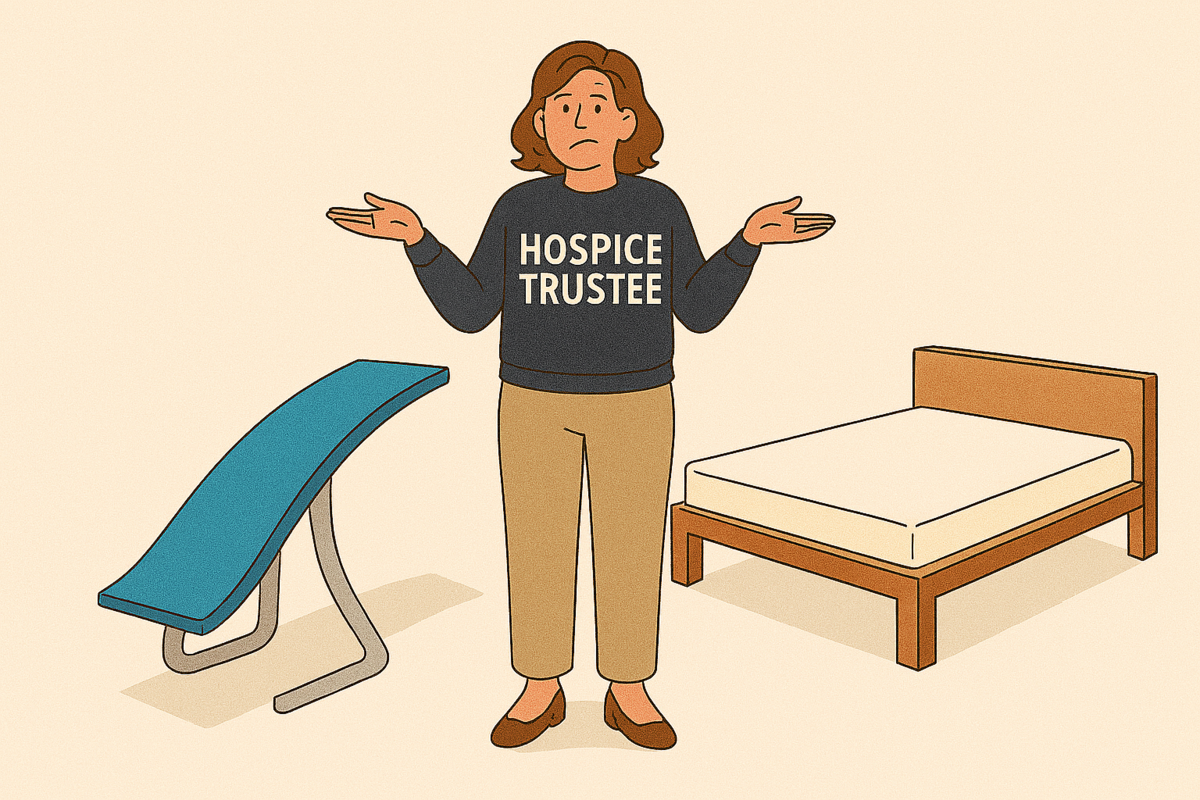
Two very different subjects, but both of great interest to hospice Chairs.
Goetz Eggelhoefer, Chair at Jersey Hospice Care, explained their experience of preparing for assisted dying. The Jersey bill received Royal Assent in July, with the service expected to go live in late 2027 after an 18-month implementation phase.
The hospice will not provide an assisted dying service, but continue to advise on clinical pathways and education around the issue. It has also established a 'living well' team supporting patients from the point of diagnosis.
Much of the discussion concerned the grey areas hospices will have to work through. For example, if an in-patient chose to access assisted dying, would a hospice allow external providers to manage the process, with its own staff stepping away?
The second half of the session turned to reserves policies, and the limitations of the familiar 'months of expenditure' measure. It treats all income and expenditure as equal, assumes all reserves are equally liquid, and can encourage either false confidence or excessive caution. None of which reflects the way a crisis actually arrives.
A risk-based approach starts instead with scenario planning, distinguishes cash at hand from contingent reserves, and ties the policy to strategy and wider risk management. It treats reserves as a potential springboard to growth, as well as a safety net to fall back on.
We looked at analysis of members' own policies and where each sat on that scale, and at how to explain the rationale to funders. One member noted that lower reserves had, in fact, strengthened their grant applications.

Sabrina Segal, Director of The Risk Collaborative, put a deceptively simple question to the group: what is your risk register actually for?
Her argument is that registers and heat maps grew out of corporate crises and have drifted into compliance exercises — long lists of things to avoid, rarely resourced and rarely connected to what the hospice is trying to achieve. The ISO definition of risk, the effect of uncertainty on objectives, cuts both ways: threats and opportunities.
The alternative starts with organisational fragility rather than risk appetite. Where are we inherently vulnerable — funding model, workforce, funder relationships, service delivery, governance, reputation? Sabrina calls the response actionable vigilance: preparing for shocks you cannot foresee rather than trying to list them all.
Members' own examples made the point better than any theory. A drunk driver ploughing into a hospice building. A cyber-attack at a sixth form college. Nobody had those on a register.
We also explored Objective-Centred Risk Management, which ties preparation directly to objectives and budgets — allowing a Board to track how confident it is of delivering its strategy, rather than simply reviewing a list.

This session brought Chairs together to explore the delicate balance between strategic oversight and operational involvement. And in particular, who should decide what, when and how.
Governance review data shows that confusion and disagreement over decision‑making is a major source of tension between Boards and Executive teams. To resolve this, the importance of clear agreed role descriptions was agreed upon. Likewise, the importance of trust, humility, and curiosity.
The group also examined practical tools such as Schedules of Delegation and RACI matrices, recognising both their value and limitations.
What did we decide upon? That everyone will have their own view on who should decide what. But that respecting and understanding that is key.
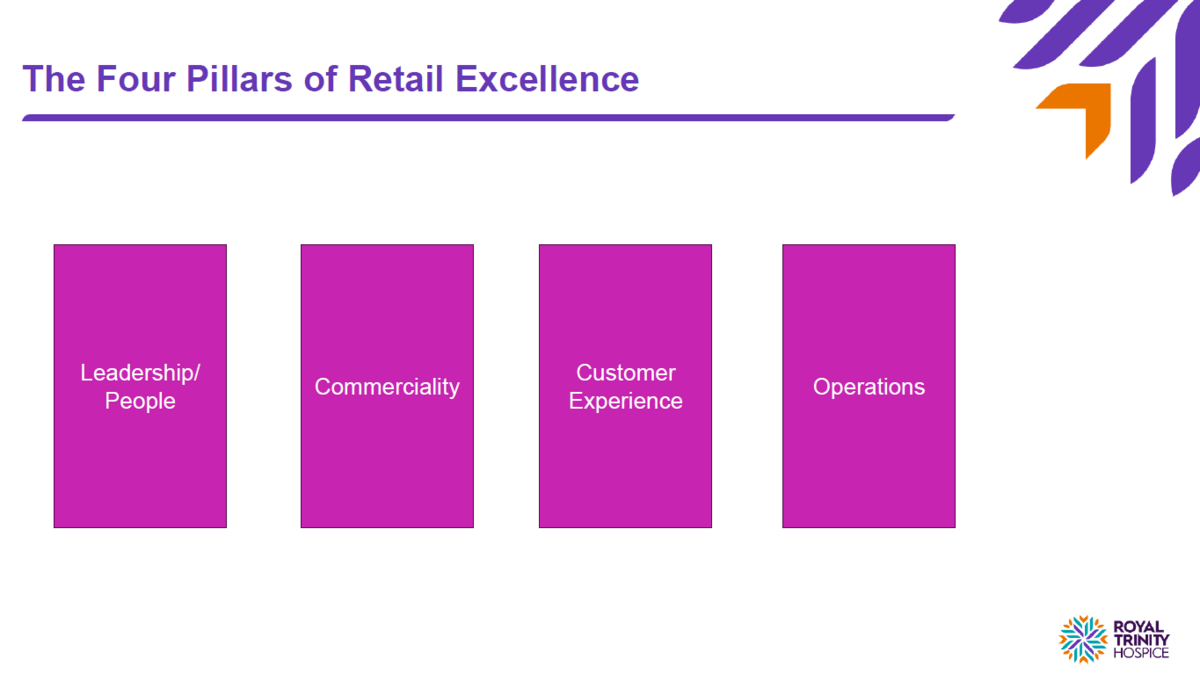
This month we were delighted to welcome Daniel Holloway, Commercial Director at Royal Trinity Hospice. Previously, as Retail Director, Daniel increased Royal Trinity’s retail profit by 50%, and now advises other charities on how to achieve similar results.
Daniel shared that successful hospice retail is built around these key pillars of excellence. But the message was clear. Customer experience is the most overlooked pillar — yet it’s where loyalty and value are created.
Daniel reinforced the power of emotional connection in charity settings. Ideas included:
Retail storytelling — e.g., luggage labels sharing the history of unusual/high-value items
A “little black book” to track customer preferences for specific brands or product types
We learned that retail excellence in hospice shops is about creating places people love to visit while sustaining the mission that matters.
Start with research - Know what you stand for - Invest where customers notice - Build emotional connection, not just transactions.

‘Everything seems to be going OK. But how would I really know if it wasn’t?’
How many Chairs have asked themselves this question?
This session looked at the various ways of gathering information and feedback to enable Chairs and their fellow Trustees to be assured that the hospice is in a good place.
These varied from formal audits to informal visits and conversations with staff and volunteers; from questionnaires and statistics to ‘gut feel’ and instinct. But judging morale and culture is not easy, especially when you are told yours is a hands-off role.
You don’t want to be kept awake every night, worrying about what might be going on. But equally you don’t want to sleep soundly in a state of ignorance, only to have nightmares when you wake up!

This session discussed the key role a Chair has in navigating relationships across the charity. Most prominent is the one between themselves and the CEO, arguably the most important in any charity. But those with individual Trustees are also key. And sometimes the Chair has to act as peacemaker or broker in disputes between other members of the Board or Executive.
The importance of strong EI skills, empathy and diplomacy was agreed upon. But also abiding by organisational values and not shying away from difficult decisions. In challenging times, the need to balance due process and being fair to those involved, but avoiding an elongated timescale that can seriously damage the charity was discussed.
The group agreed that having a mentor, or at least reliable people to share problems with, can be just as important for a Chair as it is for those in Executive roles.
Our next session is on Wednesday 28th October from 10 am to 11.30 am when we will be discussing Trustee Recruitment and Retention.
Contact me for more details.
